
Resilience in Crisis: Military Lessons Every Health System Needs to Learn
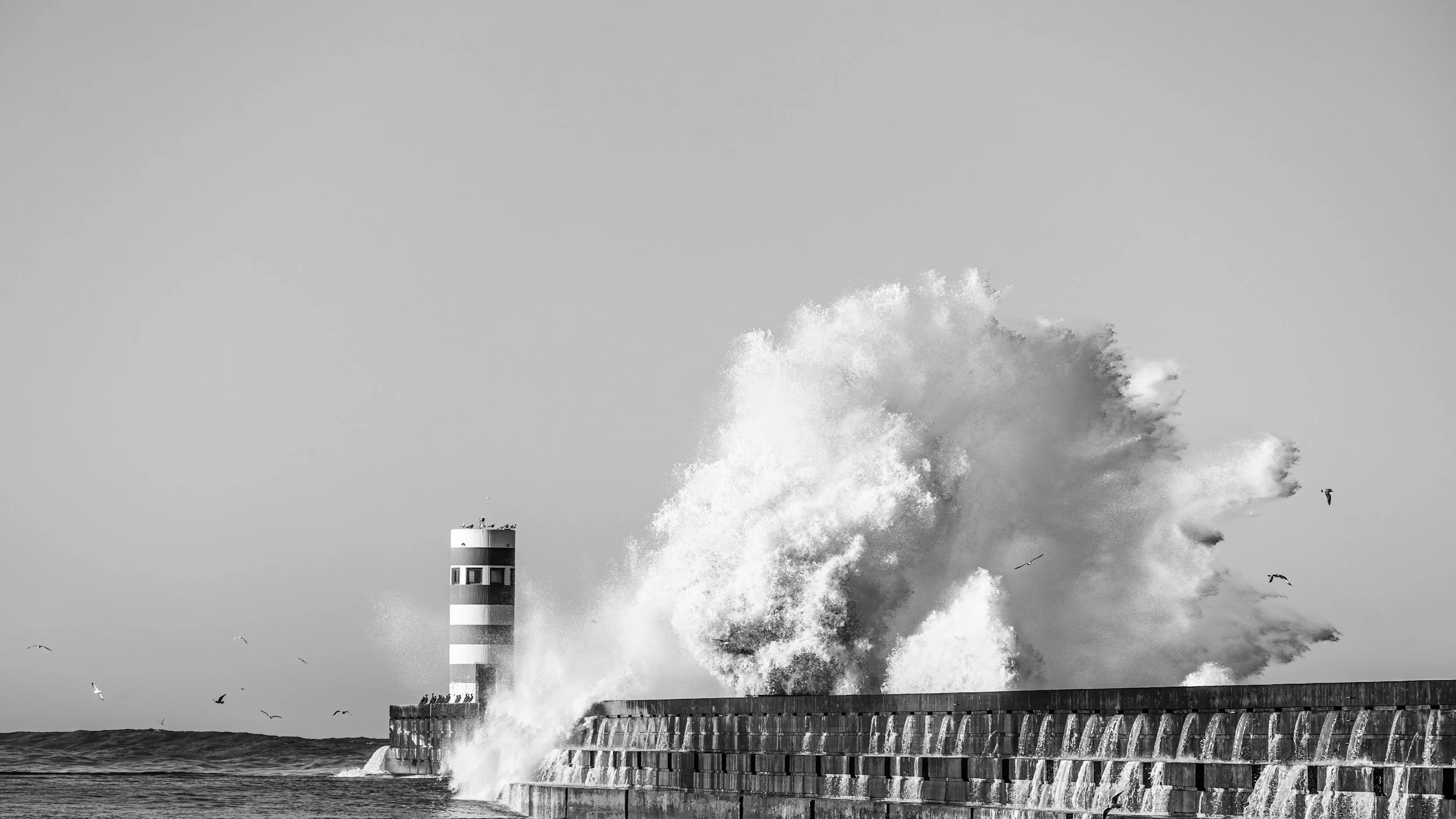
Picture by Gary Walker-Jones on Unsplash
Every institution that has survived a crisis — military, civilian, or medical — has done so because someone, somewhere, prepared for it before it arrived. The question is whether we are willing to learn from the ones that did.
The language of resilience has become so common in organizational life that it risks losing its meaning. Resilience workshops, resilience frameworks, resilience strategies — the word appears in mission statements and annual reports with such frequency that it is easy to forget what it actually describes: the capacity to absorb a serious blow and still function. Not merely to recover eventually, but to keep the lights on while everything around you is on fire.
The military understood this long before it became a management concept. Armies have been building systems capable of absorbing catastrophic loss and continuing to operate for as long as there have been armies. The frameworks they have developed — around preparation, response, and recovery; around discipline, adaptability, and mental robustness; around the relationships between individuals, teams, and institutions — offer something genuinely useful to any society trying to build resilience into its own structures. That transfer of knowledge is what this article examines.
Mental Resilience: Individual Strength and the Teams That Sustain It
Resilience at the individual level and resilience at the team level are distinct — and both matter. Individual resilience determines how a person responds when the pressure is on them alone: their capacity to recover from setbacks, regulate their own reactions, and continue to function when conditions deteriorate. Team resilience is something different. It is what happens when a group of people create conditions in which each member is more likely to succeed than they would be on their own.
The relationship between the two has been examined closely in military contexts, where the consequences of getting it wrong are immediate and irreversible. What the evidence consistently shows is that individual resilience is most strongly linked to psychological health — to whether a person can sustain their wellbeing under pressure. Team resilience, by contrast, is most strongly linked to performance — to whether the group continues to function effectively when circumstances demand it. [1]
This distinction has direct implications for how organisations build resilience. You cannot substitute one for the other. Investing only in individual resilience — through training, wellbeing programmes, psychological support — without building the team structures that amplify and sustain it leaves people exposed. And conversely, a high-performing team built on brittle individuals will crack under sustained pressure. The military model insists on both, and so should any institution that expects to operate under conditions of genuine stress.
The Architecture of Societal Resilience: Prepare, Respond, Recover
Military thinking about resilience is organised around three phases. They are sequential in that one follows another, but in practice, they overlap, and the work done in each phase determines how well the next one goes.
Prepare
Preparation is everything that happens before the crisis arrives. It encompasses threat assessment, relationship building, resource positioning, and education. Within preparation, there are three interlocking tasks: foresee, build, and educate.
Foresight is the most underinvested of the three. It requires the willingness to imagine scenarios that have not yet occurred and to take them seriously before they arrive. Build is the construction of the physical and institutional infrastructure — the facilities, the stockpiles, the protocols — that makes response possible. Educate is the sustained effort to ensure that the people who will need to use these systems actually know how to use them, under pressure, when it counts.
Respond
Response is everything that happens once the crisis is under way. The key tasks — understand, inform, mobilise — reflect the reality that the first challenge in any serious emergency is not action but clarity. Before you can mobilise effectively, you have to understand what is actually happening, and before that understanding can translate into coordinated action, it has to be communicated to the people who need it.
The military’s emphasis on clear communication channels is not bureaucratic preference. It is a recognition that in a crisis, the speed and accuracy of information determines outcomes. Systems that depend on improvised communication under stress fail. Systems that have practised their communication protocols under controlled conditions are more likely to hold.
Recover
Recovery is the longest and most resource-intensive phase, and it is the one that receives the least attention in planning. Once the immediate crisis has passed, the work of restoring people to safety, returning resources to readiness, and rebuilding institutional capacity begins. It is also the phase most likely to continue long after public and political attention has moved on.
The military framework identifies three sub-tasks within recovery: reset, regenerate, and innovate. Reset is the return to prior function. Regenerate is the rebuilding of capacity — often to a higher level than before. Innovate is the application of what was learned in the crisis to build systems that will perform better next time. The third task is the one most organisations skip, and it is the reason they face the same failures twice. [2]
The Three Pillars: Discipline, Preparedness, and Adaptability
Effective crisis management rests on three interlocking elements. They are not interchangeable, and the absence of any one of them compromises the other tw0o
1.Discipline
Discipline in a crisis context means something more specific than following rules. It means the systematic adherence to established protocols under conditions that generate powerful incentives to deviate from them. When a situation is novel, frightening, and moving quickly, the instinct to improvise is strong. Disciplined organisations resist that instinct where the protocols are sound, and channel it productively where they are not.
This is why Standard Operating Procedures matter less as written documents than as deeply internalised habits. SOPs that exist only on paper are retrieved under stress; SOPs that have been practised until they are instinctive are executed under stress. The gap between those two states is the gap between a crisis that is managed and one that is survived.
2. Preparedness
Preparedness is the sum of proactive steps taken before a crisis to build genuine readiness. The military evidence is clear: organisations that invest in preparedness — through scenario simulation, cross-sector exercises, and redundant infrastructure — recover faster from serious disruptions and sustain less damage in the process. [3]
Crisis management exercises are not logistical rehearsals. They are diagnostic tools. Their value lies not in proving that systems work but in revealing the specific points at which they do not — the communication gaps, the resource bottlenecks, the decision-making paralysis — under conditions safe enough to learn from them.
3.Adaptability
Adaptability is the capacity to adjust strategy and behaviour when the situation departs from the plan — as it will, always, in some way the plan did not anticipate. It is often the deciding factor in survival precisely because no plan fully accounts for reality.
The military concept of decentralised decision-making — sometimes called polycentricity — is the institutional expression of adaptability. It means training local leaders to make relevant, timely decisions nested within a broader strategy, rather than waiting for authorisation from above while the situation deteriorates. In societal recovery, this translates to empowering community leaders and local institutions to act while remaining coordinated with national frameworks. [3]
Military Lessons for Societal Recovery
As global threats multiply — armed conflict, climate disruption, pandemics, infrastructure attack — the frameworks developed in military contexts for building and sustaining resilience have direct application to civilian institutions. Several specific lessons are worth drawing out. [5]
A Whole-of-Society Approach
The military learned early that resilience cannot be concentrated in a single institution, however well-resourced. Effective recovery requires active cooperation across all sectors: government departments, the private sector, local communities, and individual citizens. The military can provide capacity and coordination, but it cannot substitute for the distributed resilience of a functioning society.
This has practical implications for civil-military coordination. Liaison officers embedded across government departments — not deployed to them in a crisis but working alongside them in peacetime — build the relationships, the mutual understanding, and the communication habits that allow coordination to happen quickly when it matters. Named points of contact, up-to-date contact lists, and clearly defined roles in local resilience forums are not administrative details. They are the connective tissue of a resilient system.
Protecting Critical Infrastructure
Military strategists have long understood that resilience depends on the survival of essential services. Internet undersea cables, energy grids, water systems, and transport networks are not just economic assets — they are the physical substrate of societal function. Their failure in a crisis is not an inconvenience; it is a force multiplier for every other form of harm.
The lesson for civilian planners is redundancy: diverse resource streams and backup systems that can compensate when primary infrastructure fails. This is expensive in peacetime and saves lives in crisis. The defence assessment of industry relationships — ensuring adequate capacity and realistic response times — is a model worth applying well beyond the defence sector.
Building Psychological Resilience at Scale
Military programmes such as Master Resilience Training were developed to build mental agility, optimism, and self-regulation at the individual level, precisely because the alternative — waiting for trauma to occur and then treating it — is both more costly and less effective. The goal is not the elimination of stress but the development of people who can cope with it, process it, and continue to function. [4]
During wartime and extended crises, resilience at the community level draws on social bonds, shared routines, and the capacity to adapt to new and difficult realities. These are not soft resources. They are the mechanisms by which populations sustain function and morale under sustained pressure. Educating communities about threats, building awareness of the systems in place, and communicating clearly about what individuals can do — including practical steps such as maintaining emergency supplies — is an investment in distributed resilience that no central institution can replicate.
Communication as a Strategic Asset
Effective communication in a crisis does two things simultaneously: it coordinates the response, and it sustains public confidence in the institutions managing it. Both matter. An operationally effective response that is poorly communicated will still generate panic; a well-communicated response to an operationally weak system will eventually fail to hold public trust.
The military model of exercising communication protocols alongside operational protocols — and doing so in partnership with wider government, civil agencies, and international partners — ensures that when the moment comes, the channels work and the people using them know each other. Pre-approved messaging, trusted spokesperson networks, and multilingual communication capacity are not afterthoughts. They need to be built before they are needed.
Recommendations for Future Recovery Frameworks
The following recommendations draw directly on military frameworks and are applicable to any institution or government seeking to build genuine resilience into its structures. [6]
Run realistic scenario simulations
Crisis management exercises should be designed to surface failure points, not confirm existing assumptions. The discomfort of discovering a weakness in a controlled exercise is the point. Exercises conducted with international partners add interoperability and shared-practice benefits that unilateral exercises cannot provide.
Embed SOPs before they are needed
Standard operating procedures must be practised until they are instinctive. Documentation is not preparation. The test of an SOP is whether it is executed correctly under stress by someone who has not consulted the written version in six months.
Build redundancy into critical systems
Primary systems will fail under sufficient stress. Backup systems, alternative supply chains, and diverse resource streams are not wasteful duplication; they are the margin that makes recovery possible. This applies to energy, communications, water, and medical supply with equal force.
Decentralise decision-making with clear boundaries
Local leaders need the authority to act without waiting for central approval, within a framework that keeps their decisions coordinated with national strategy. The boundaries of that authority need to be defined and practised before the crisis, not negotiated during it.
Invest in habitual relationships
The relationships between military and civilian agencies, between government departments, between public institutions and NGOs, must exist and be functional before they are called upon. Relationships built during a crisis are inadequate. Relationships that have been maintained and exercised in peacetime are the ones that hold.
Prioritise recovery functions by urgency
Tiered prioritisation — ranking recovery functions by urgency and resource availability — ensures that the most critical societal functions (water, communications, healthcare) are restored first. This is not a natural default under crisis pressure. It must be planned and practised.
Mobilise civil capacity through technology
New and emerging technologies — apps, alert systems, targeted messaging — provide mechanisms for rapidly activating volunteers with specific skills, from basic first aid to specialised technical capacity. This distributed mobilisation capability is an underused resource in most civilian resilience frameworks.
Conclusion
The evidence from military contexts is consistent and transferable. Individual and team resilience are distinct but interdependent. The frameworks developed for preparing, responding to, and recovering from crisis — when they are properly resourced and practised — significantly reduce mortality and long-term institutional damage. And the gap between organisations that have genuinely invested in resilience and those that have paid it lip service becomes starkly visible the moment the crisis arrives.
This is not an argument for militarising civilian institutions. It is an argument for borrowing what works. The military has conducted this experiment repeatedly, at scale, under conditions that make the results credible. Discipline, preparedness, adaptability; individual and team resilience; civil-military coordination; psychological robustness; communication as strategy — these are not military values. They are the values of any institution that intends to function when it matters most.
The time to build that capacity is before the crisis arrives. It always is.
References
1. Frigotto ML, Young M, Pinheiro R. Resilience in organizations and societies: the state of the art and three organizing principles for moving forward. In: Pinheiro R, Frigotto ML, Young M (eds). Towards Resilient Organizations and Societies. Palgrave Macmillan, Cham; 2022. pp.1–17.
2. McAslan A. Organisational Resilience: Understanding the Concept and its Application. Strawman Paper. Torrens Resilience Institute, Adelaide; 2010.
3. Cacioppo JT, Reis HT, Zautra AJ. Social resilience: the value of social fitness with an application to the military. Am Psychol. 2011;66(1):43–51.
4. Nash W, Steenkamp M, Conoscenti L, Litz BT. The stress continuum model: a military organizational approach to resilience and recovery. In: Southwick S, Litz BT, Friedman M, Charney D (eds). Resiliency in Clinical Practice. Cambridge University Press; 2012. pp.238–252.
5. Davydov DM, Stewart R, Ritchie K, Chaudieu I. Resilience and mental health. Clin Psychol Rev. 2010;30(5):479–495.
6. Hartmann S, Weiss M, Newman A, Hoegl M. Resilience in the workplace: a multilevel review and synthesis. Appl Psychol. 2020;69(3):913–959.
Doctor Dialogues | May 2026 | All rights reserved